Commercial · Toronto
Access Control Installation
The team has grown past the point where one shared key still makes sense. New hires need a way in before a manager arrives, and the current setup cannot tell one person's entry from another's.
Access Control Installation
In plain words
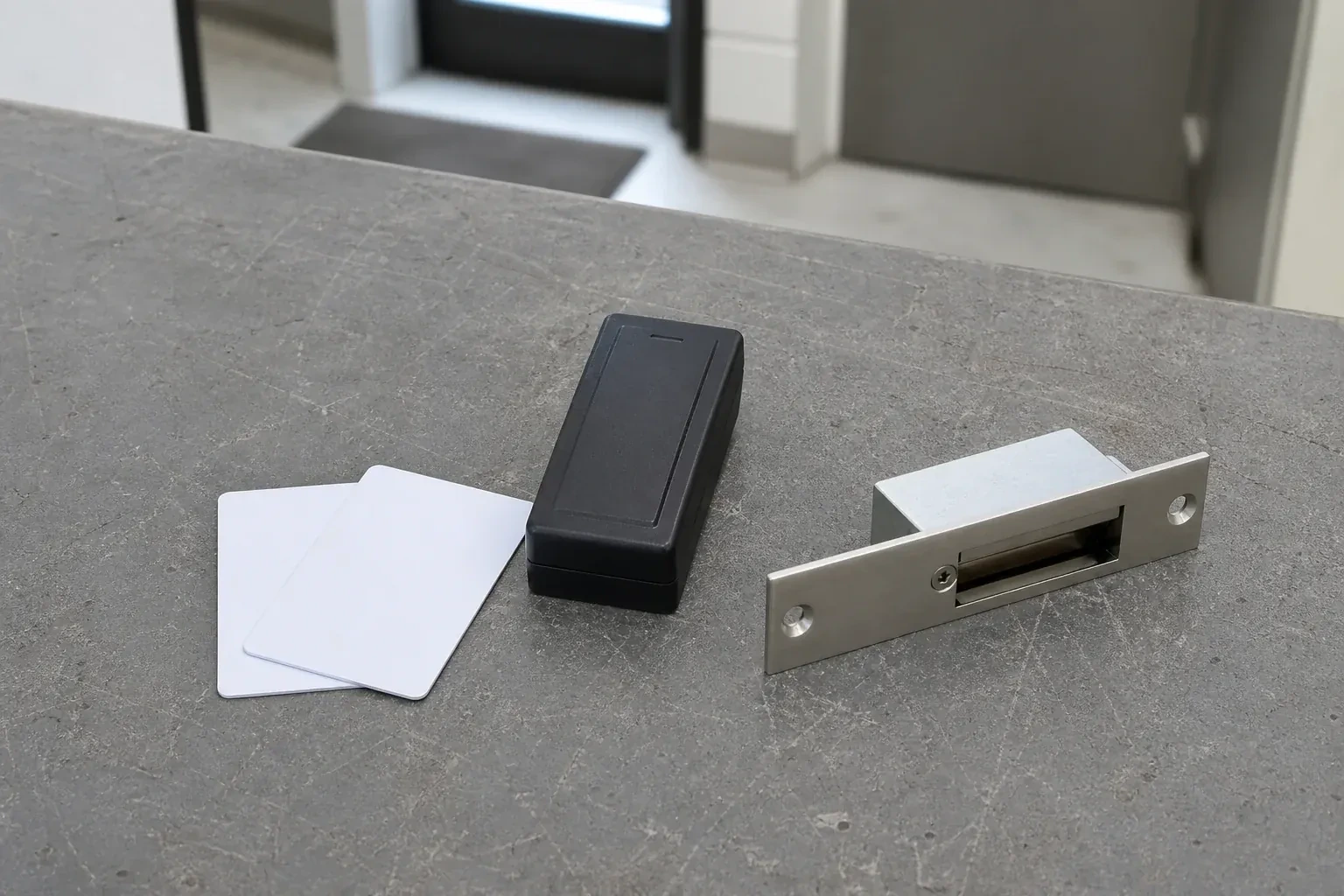
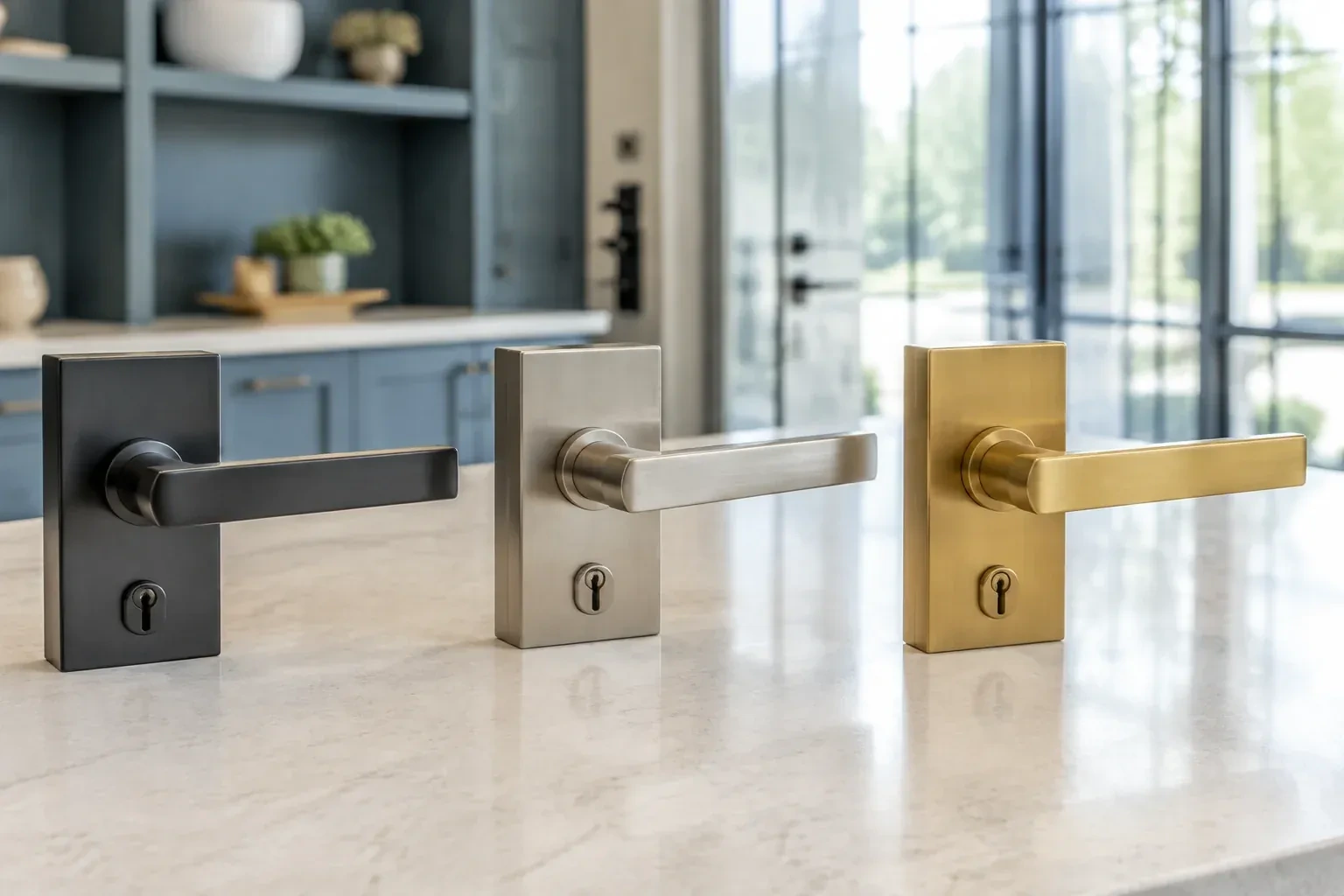
Locking hardware varies by opening: an electric strike, fitted into the existing frame, keeps the mechanical latch and releases it briefly for a valid credential; a magnetic lock clamps the door shut with an electromagnet and suits a frame or door that will not take a strike; and some openings use an electromechanical lock or a different controlled lockset entirely. Several of these can also be fitted with a mechanical override cylinder, so a lost signal, a dead battery, or a controller fault still leaves that particular door opening by key, though the option depends on the hardware chosen for it.
How the visit goesThe team has grown past the point where one shared key still makes sense. New hires need a way in before a manager arrives, and the current setup cannot tell one person's entry from another's.
Toronto
How the visit goes
Reading the door and the frame
Every opening gets a physical look before it gets any wiring. The locksmith checks what the door and frame are made of, which way the door swings, whether an electric strike will seat cleanly in the existing frame, and whether the door sits on a fire separation, which changes what can be added to it. A hollow metal frame, a wood door, and an aluminum storefront door each take different hardware, and a door that already sits loosely in its frame is noted before an electric strike or a magnetic lock is chosen for it, since alignment decides how reliably the lock releases.
Testing every opening before calling it finished
Each door is tested the same way regardless of how simple or complex its hardware is: a valid credential releases it, a disabled one does not, the request-to-exit device or push bar releases a magnetic lock on demand, and the door position switch correctly reports open and closed. Where a fire alarm interface is fitted, the locksmith confirms the lock actually releases when the alarm activates, not only when it is reset afterward. The battery backup is tested by removing main power briefly and confirming every door still behaves the way it is meant to.
Adding a door later without starting over
A system sized with room to grow makes adding another opening later a straightforward extension rather than a second project: a new reader and lock on an added door, wired back to the existing controller where there is capacity, or a new standalone unit where the door sits far from the rest. Because schedules, access levels and credentials already exist for the rest of the building, the new door usually needs only to be slotted into that structure rather than have all of it worked out again from the beginning.
Access Control Installation
In the van
- Fire alarm interface relay
- Mechanical override cylinders
- Power supply with battery backup
- Low-voltage cable
- Card and fob readers
What affects the quote
Same fees day, night or weekend
1What cabling already exists
Exposed ceilings, accessible risers or existing conduit make running new low-voltage cable straightforward; finished walls and long runs between openings and the controller location add time and materials to the same job.
2The building's age and frame material
A modern hollow metal frame generally accepts new hardware with less adjustment than an older wood frame or a historic building, where matching the existing appearance and construction takes extra care.
3How many credentials and what type
Cards, fobs, keypad codes and mobile credentials each involve different issuing steps, and a system enrolling a handful of managers is a shorter task than one enrolling an entire staff across several shifts.
Access Control Installation: questions
What's the difference between a standalone and a networked system?
A standalone unit is a self-contained reader and lock at one door, holding its own list of credentials, though it can still need a power or network connection to run. A networked system ties several doors to shared management, sometimes through more than one controller, aggregating schedules and combining logs across all of them. The right choice depends on how many doors need controlling and whether the business wants a single place to manage all of them, rather than one being universally better.
Can the system be expanded to more doors later?
Yes. A system installed with some spare capacity in its controller and power supply can usually take another door or two by adding a reader and lock and wiring it back in. A door far from the existing wiring can instead run its own standalone unit. Either way, existing schedules and credentials do not need to be rebuilt from scratch.
Can visitors or contractors be given temporary access?
Yes, a temporary credential can be issued for a contractor, a cleaner, or a visitor with its own schedule and, where the system supports it, an expiry so it stops working on its own once the job is done. This avoids handing out a permanent code or a key that then has to be tracked down and collected afterward.
Commercial Locks
Access Control Installation near you
Choose a service to see how it works in Toronto. Each page explains the situation it suits, what the locksmith looks at first, how the job is done, and how to look after the hardware afterwards. If your problem sits between two services, either page will get you to the right conversation.