Lockouts · Toronto
Home Lockout Service
You stepped out to grab the recycling bin and the door swung shut behind you. Through the glass you can see your keys hanging on the hook by the stairs, exactly where they always are, and the latch has caught.
Home Lockout Service
In plain words
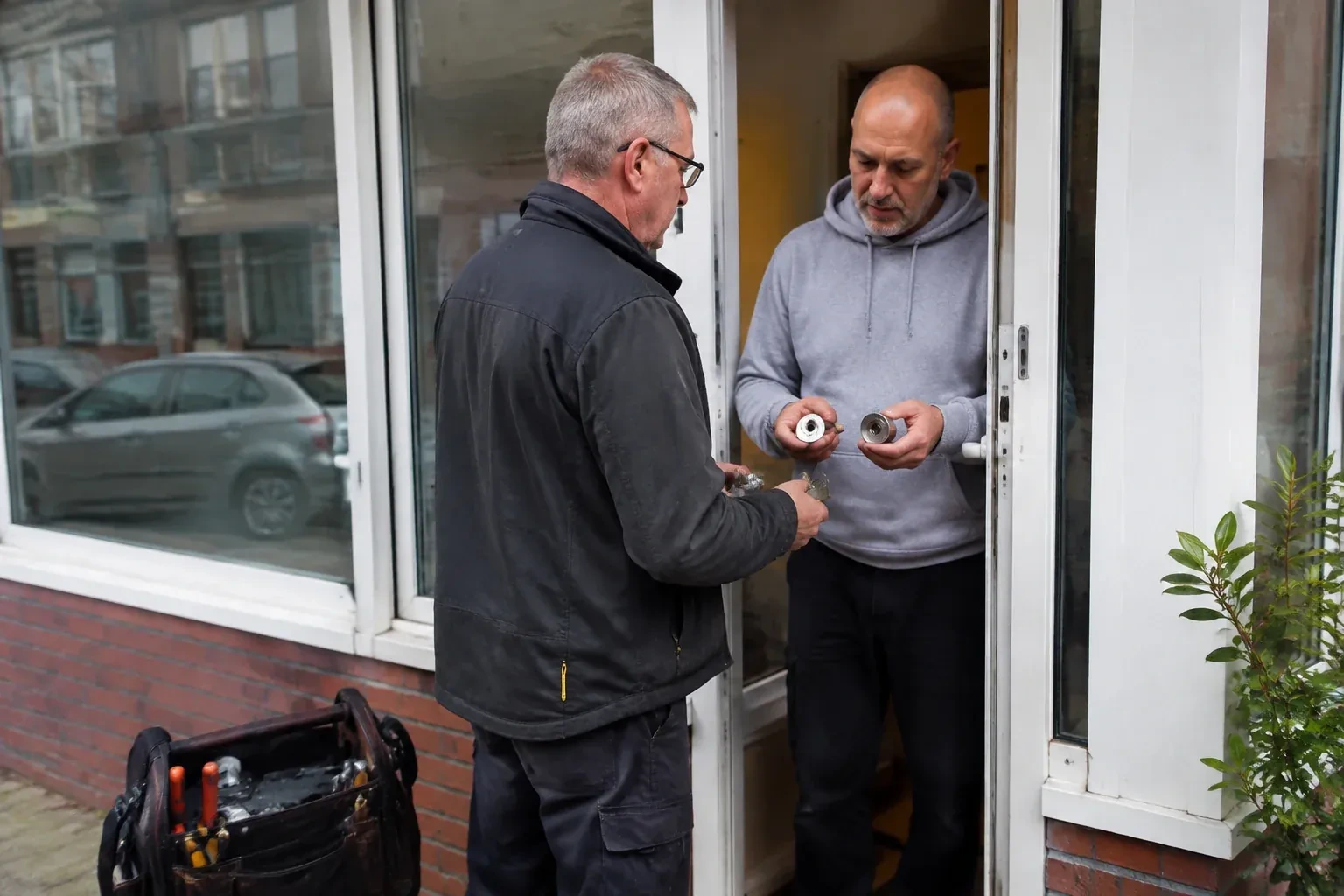
Most lockouts end with the original lock still on the door and still working. That is the point of professional entry: picks, tension tools, decoders and latch tools are designed to operate the mechanism the way a key would, without cutting or prying anything. Drilling is reserved for cylinders that will not yield, and when it is the only route the locksmith says so before starting and fits a replacement cylinder in the same visit so you are never left with a hole where a lock used to be. You keep your hardware, your finish and your existing keys whenever the situation allows.
How the visit goesThe keypad on the smart lock blinks once and goes dark. The batteries have finally given up, your phone is at four percent, and the little backup key that came in the box is in a kitchen drawer on the other side of the door.
Toronto
How the visit goes
Cold, ice and salt on the hardware
In winter the assessment starts with the weather. A keyway that took on meltwater during a thaw can be frozen solid by morning, and salt spray from a nearby driveway leaves a crust that gums up the pins. The locksmith looks for frost around the cylinder face, tests how far the key seats, and feels whether the plug is stiff from cold grease or genuinely iced. This decides between a gentle thaw with lock de-icer, warming the cylinder, or picking once the ice releases. It also flags hardware that should get a dry lubricant and a weather cover afterwards so the same morning does not repeat next week.
Opening, then closing the loop on a lost key
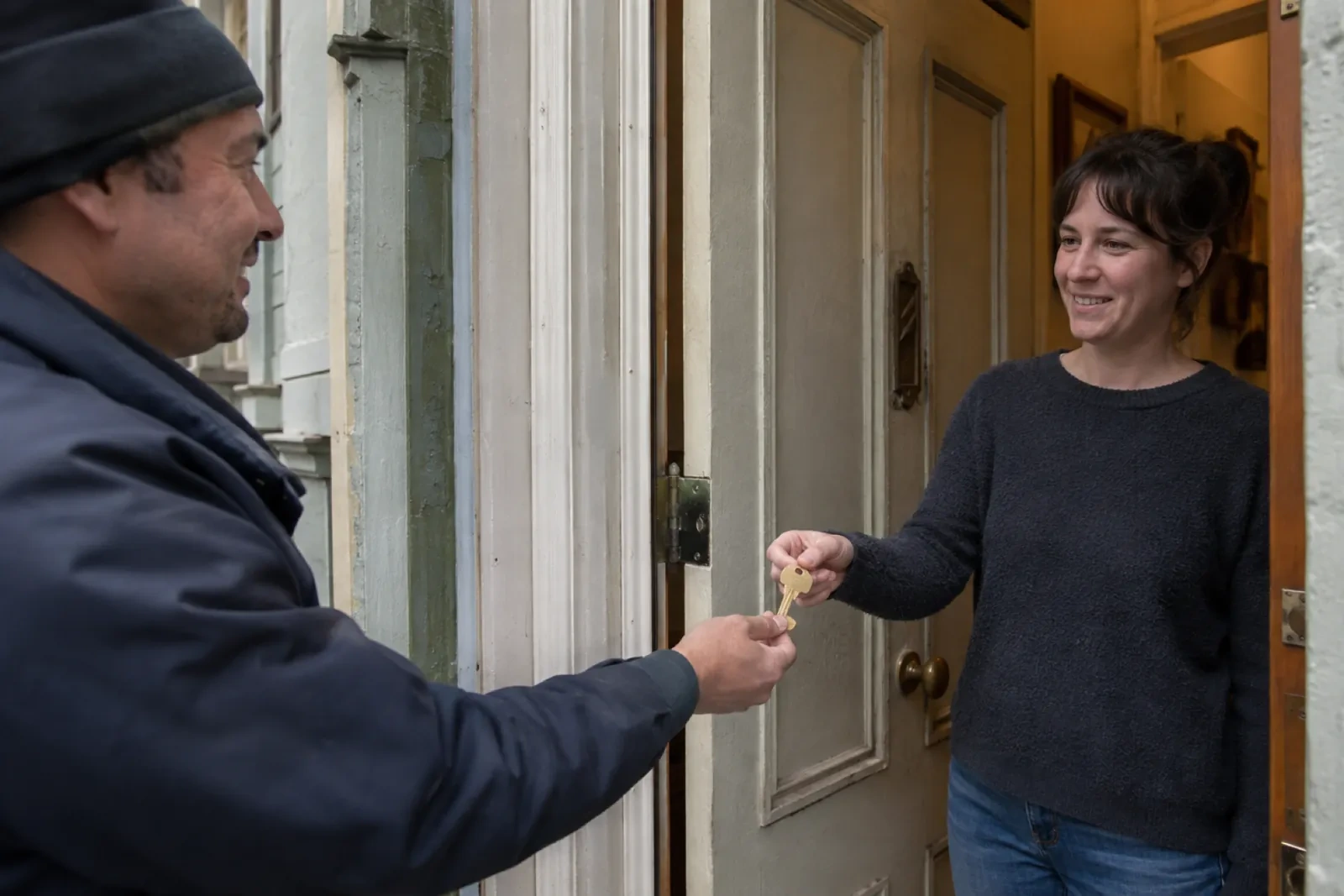
When the key is genuinely gone, the work has two halves. The first is the opening, done the usual way with picks, a decoder or a bypass. The second is making the missing key useless. The locksmith removes the cylinder, uses a plug follower to slide the plug out without spilling the springs, replaces the bottom pins to a new combination, and reassembles it so a freshly cut key operates it and the old one does not. Each exterior lock that shared the old key is treated the same so the house stays on one key. New keys are cut from the new pinning, tested in every door, and counted into your hand.
A door and frame that line up again
When the lockout traced back to a door that had sagged or swollen, you get more than an open door: the reason is dealt with. Hinge screws that had worked loose are tightened or replaced with longer ones that bite into the framing, the strike plate is adjusted or its pocket deepened so the bolt has room to throw fully, and any weatherstrip that was pushing the door out of square is trimmed. Afterwards the bolt should slide with a fingertip on the thumb-turn and no shoulder on the door. Check it again at the turn of each season, since wood keeps moving with the humidity, and a two-minute screw check saves a return visit.
Home Lockout Service
In the van
- Plug spinner
- Replacement cylinder or deadbolt
- Broken key extractors
- Latch and bypass tools
- Key blanks and key cutter
What affects the quote
Same fees day, night or weekend
1Drilling and a replacement cylinder
If the cylinder has to be drilled, the quote gains the new cylinder or complete deadbolt and the labour to fit it. You are told this before the drill comes out, never after.
2How many locks need opening
One front door is the simplest case. A front door plus a garage man-door, a storm door that latched and a mailbox in the lobby is a longer visit with more hardware to work through.
3Restricted or high-security keyways
Security pins, sidebars and patented keyways take longer to open and, if replaced, cost more as hardware than a standard cylinder. Restricted keys also have to be cut from the system's records rather than duplicated.
Home Lockout Service: questions
What if my wallet and every document are locked inside?
That is the most common version of a lockout, and there is a routine for it. Tell the locksmith on the phone so the plan is agreed before arrival. Often a neighbour can confirm you live there, a digital copy of a lease or bill is on your phone, or a property manager can vouch for you. Where none of that is available, the locksmith opens the door and completes the identification check with the documents inside before leaving.
My key snapped off in the lock. Is that still a lockout call?
It starts the same way and adds one step. The broken blade is removed with extraction tools that grip it and draw it out, rather than pushing it deeper, and then the door is opened normally. A key rarely breaks in a healthy cylinder, so the locksmith checks the pins and springs afterwards and cleans or services the cylinder if wear caused it. A new key is cut from the two halves or from the code, since a weakened copy would snap again.
When does a locksmith decide to drill instead of pick?
Drilling is the last rung, reached only when the cylinder has genuinely stopped cooperating. Typical reasons are a plug seized by corrosion or a failed spring, a key snapped deep inside that blocks the pins, a high-security cylinder whose anti-pick features make picking impractical, or a lock already damaged by someone's earlier attempt. The decision is explained before the drill comes out, the hole is confined to the cylinder, and replacement hardware goes in straight afterwards.
Lockout Services
- Broken Key ExtractionOvernight the deadbolt froze, and this morning the key would only turn partway.
- Break-In Damage Lock RepairThe patio slider is sitting crooked on its track.
- Seized & Jammed Lock OpeningThe old mortise lock on the front door of the house turns the key halfway and stops with a dull…
Home Lockout Service near you
Choose a service to see how it works in Toronto. Each page explains the situation it suits, what the locksmith looks at first, how the job is done, and how to look after the hardware afterwards. If your problem sits between two services, either page will get you to the right conversation.