Change or rekey · Toronto
Vintage Mortise Lock Service
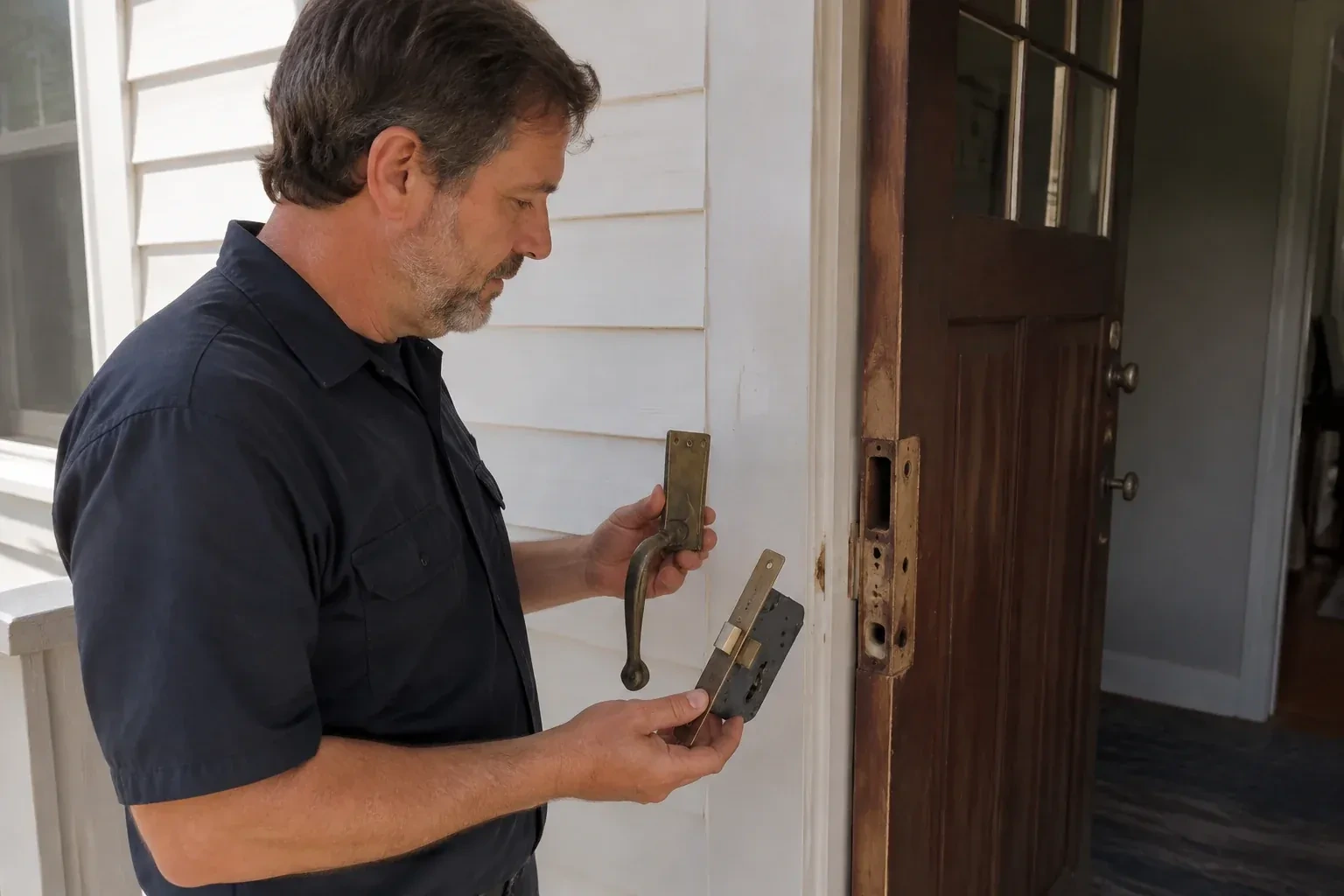
Someone painted the door years ago without removing the hardware. The faceplate, the strike and the little thumb-turn are all under several coats, the deadbolt scrapes when it moves, and the knob is stiff enough to leave marks on your hand.
Vintage Mortise Lock Service
In plain words
Vintage mortise lock service is the repair of the original lock in an older door rather than its removal. The lock is a rectangular steel case that lives inside a pocket in the door edge, and nearly everything that goes wrong with it, a tired spring, dried grease, a worn hub, a lost key, can be put right on the bench. The locksmith confirms you own or occupy the home, takes the case out through the door edge, rebuilds it, sorts out the keys and puts it back in the same pocket. The door keeps its knobs, escutcheons and history, and it locks as it did when new.
How the visit goesThe key turns freely in the round cylinder on the door, all the way around and back, without the bolt shifting at all. The cylinder itself wobbles slightly when you press it, as if it has come loose inside the door.
Toronto
How the visit goes
Who owns the door
The first check has nothing to do with the lock. The locksmith confirms that the person asking for the work owns the home or lawfully lives in it, since a serviced lock and a freshly cut key are, in the end, a way into someone's house. Photo identification and something tying you to the address usually settles it in a moment. On a rental, the landlord and the tenant are expected to agree on lock changes and share keys, so the locksmith asks who should hold the new bit keys or cylinder keys and notes it. This small formality protects the household as much as anyone, and it is done before a screwdriver comes out.
Springs, levers and followers
Springs are the usual culprits and the easiest fix. Broken coil and flat springs are matched from stock by length, wire gauge and shape, and fitted so the latch snaps out and the knob returns to level. A worn or cracked lever is matched from a donor case where one exists; where it does not, a replacement is filed from stock to the original's profile, which is slow, careful bench work rather than magic. A rounded hub is replaced or bushed. When every part moves as it should, the case is closed and cycled by hand with the cover on until the action is smooth and even in both directions.
How to lubricate it, and how not to
A serviced mortise case wants very little. Once a year, a single drop of light lock oil into the latch and the bolt from the door edge, with the faceplate screws briefly backed off if needed, keeps the levers gliding. If the lock has a pin-tumbler cylinder, that cylinder gets dry graphite or a PTFE lubricant in the keyway instead, because oil in a cylinder gathers grit and stiffens the pins. General-purpose spray lubricants belong nowhere on this hardware; they flush out the little oil that should stay and leave a film that dust settles into. The locksmith will show you where the drop goes so you are not guessing.
Vintage Mortise Lock Service
In the van
- Cylinder set screw
- Hardwood dowel and wood glue
- Spindle and knob set screws
- Warding files
- Latch and hub springs
What affects the quote
Same fees day, night or weekend
1Whether the door has to come off its hinges
Some mortise cases can be serviced with the door hanging in place, while a tight jamb or a stubborn case sometimes means lifting the door off its hinges onto a level bench. That step is identified once the case is open and the repair needs are clear.
2Condition of the wood
Stripped screw holes, a loosened pocket or a split at the door edge need dowelling, shimming or gluing before the case can be trusted. That woodwork is quoted once the locksmith has seen the pocket empty.
3Bit key or cylinder lock
A bit-key case has keys filed by hand on the bench, while a cylinder lock is rekeyed or fitted with a new cylinder on a key machine. The two take different time and materials, and the quote follows.
Vintage Mortise Lock Service: questions
Can you match a missing knob, plate or thumb-turn?
Often, yes. Locksmiths who work on older hardware keep salvage and reproduction trim in the common patterns and finishes, and a knob, rosette or escutcheon can usually be found close enough that the pair on one door match. Where nothing suitable exists, the trim from a less visible door can be moved to the entry and the reproduction fitted where it is seen less. Bring or photograph the surviving piece so it can be matched.
What information helps before you come out?
Whether the door takes a skeleton-style bit key or a flat key in a round cylinder, roughly when the house was built, what the knob and bolt are doing, and whether the trouble is worse with the door closed. A photo of the faceplate in the door edge and one of the keyhole side is worth a great deal. Mention how many doors are involved and how many keys you would like afterwards.
Can the lock be made more secure while keeping it original?
Yes, within reason. A later mortise case can take a modern high-security cylinder of the right thread and cam, chosen for its pick resistance; stopping casual key copying is a separate question, answered by fitting a restricted or patented key system alongside it. Longer screws into the strike and a properly seated deadbolt add more than most people expect. For a bit-key lock, the practical gains are a full-throw deadbolt and a good strike; if more is wanted, a separate modern deadbolt above it leaves the original lock untouched.
Change or Rekey Locks
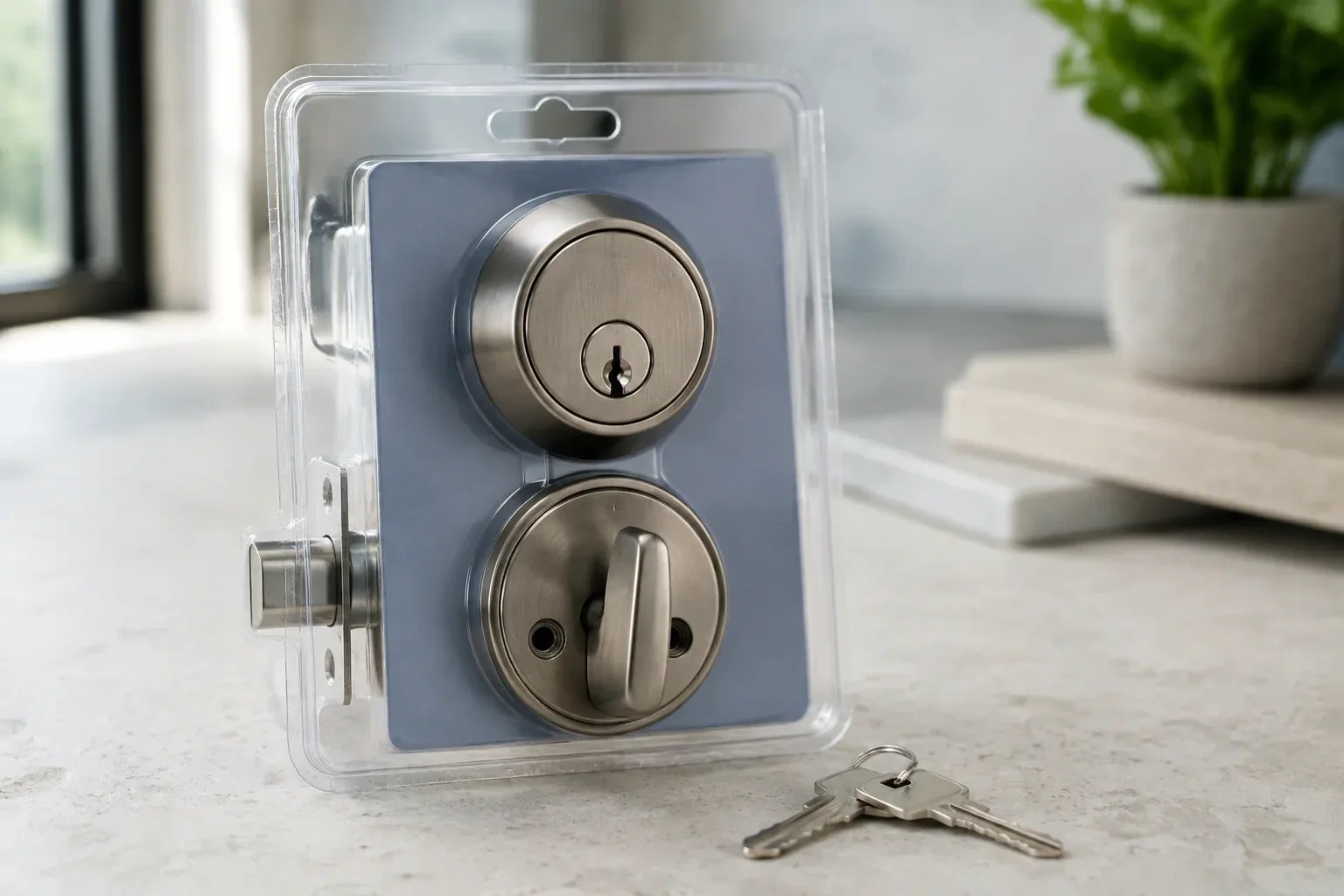
- Deadbolt InstallationThe back door has a deadbolt in name only: a short bolt, a thin brass strike held by two little…
- Lock Replacement & UpgradeEvery morning the front door key needs the same little dance: push in, lift, wiggle, turn.
- Smart Lock InstallationHalf the evenings someone asks whether the back door got locked, and nobody is sure.
Vintage Mortise Lock Service near you
Choose a service to see how it works in Toronto. Each page explains the situation it suits, what the locksmith looks at first, how the job is done, and how to look after the hardware afterwards. If your problem sits between two services, either page will get you to the right conversation.