Lockouts · Toronto
Seized & Jammed Lock Opening
The old mortise lock on the front door of the house turns the key halfway and stops with a dull clunk. It has been getting harder for months, and the brass key is starting to show a bend.
Seized & Jammed Lock Opening
In plain words
This service has a season here. The first wet fortnight of winter sends meltwater into keyways that freezes overnight, and doors on the north and shaded sides of a building stay iced the longest. Salt spray from driveways and walkways leaves a crust that thickens with every thaw. Then summer humidity swells wood doors until the bolt drags in its pocket. A jammed lock opening in these conditions means thawing without boiling water, flushing out salt, drying the cylinder, and dressing it with a lubricant that sheds moisture, along with a check of the door so the same weather does not jam it again next month.
How the visit goesEvery time you pull the key out of the side door it comes away gritty. The lock has been sticky since the salt trucks started running, and today it has gone from sticky to solid, with the bolt still thrown.
Toronto
How the visit goes
What is inside the keyway
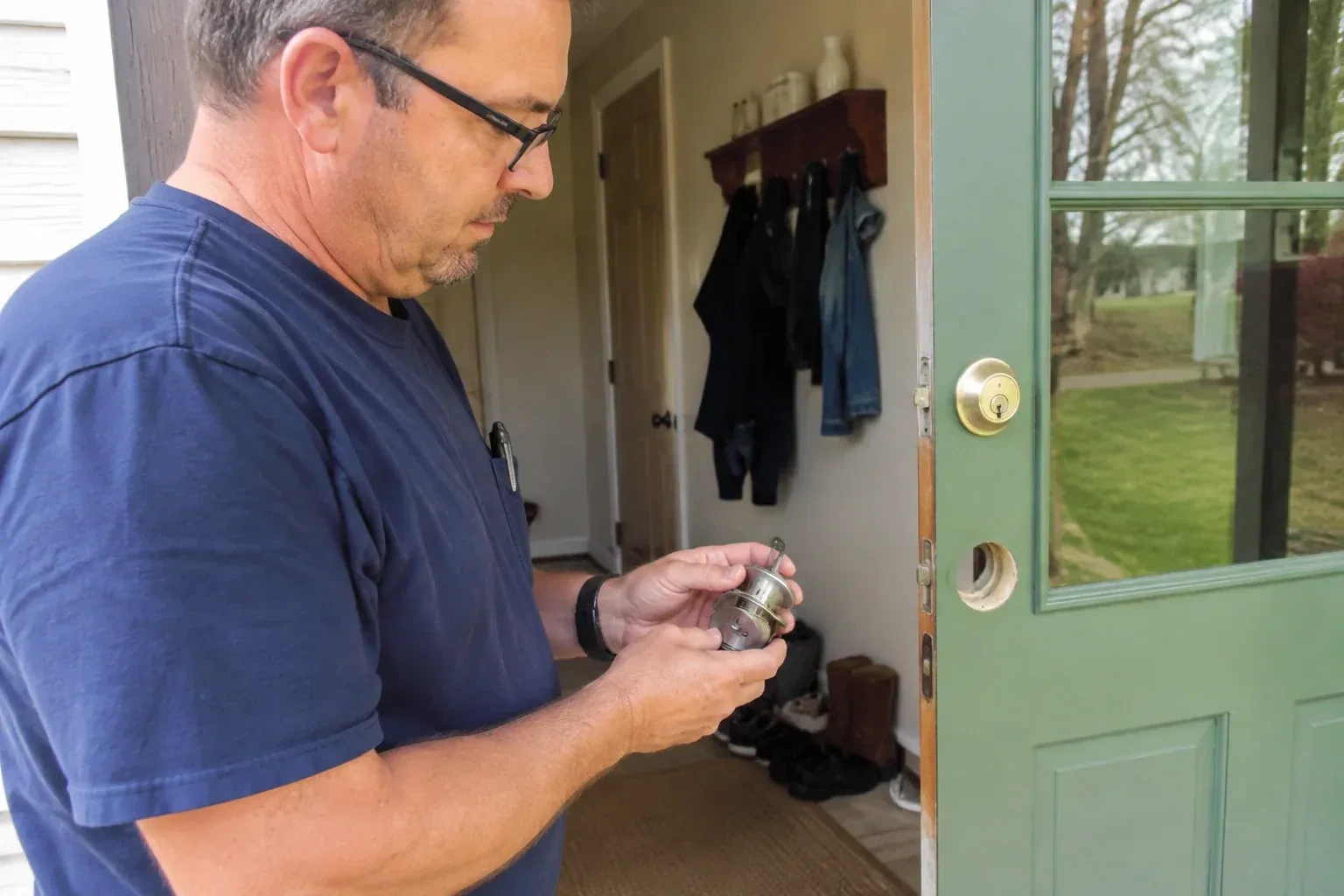
A small mirror and a bright light show what the keyway has collected. Salt crust, sand, metal filings, sawdust from a renovation and the gummy residue of household spray oils are all common, and each reads differently: a dry gritty feel, a sticky drag, or a plug that will not accept the key to full depth. Ice shows as frost on the cylinder face and a key that stops short. A cylinder cap that has loosened lets the plug sit crooked so the pins never line up. This look decides whether the cylinder needs a flush and dry lubricant, a thaw, a re-tightened cap, or a full strip on the bench.
Freeing a seized cylinder without forcing it
A plug that will not turn is coaxed, not wrenched. The locksmith flushes the keyway with an electronic contact cleaner to lift out grit and old residue, then applies a penetrating lubricant sparingly, since too much simply carries dirt deeper. The key is worked in small movements, in and out and a few degrees each way, letting the pins settle back into their stacks. If the cylinder cap has loosened, it is snugged so the plug sits square. As the plug begins to move, tension is kept light so nothing inside is bent. Once the door is open, the cylinder is removed for proper cleaning rather than left with lubricant masking the wear.
A lock that turns with two fingers
You leave with a lock that operates the way it did when it was new: the key seats fully, the plug turns without a wiggle, the bolt throws and retracts through its whole travel, and the door closes and locks without a shoulder. The locksmith has cycled it from both sides and with every key, and has shown you where the trouble was, whether that was a gritty keyway, a broken tailpiece or a strike plate a few millimetres out. If you had a habit of lifting the door or pulling it toward you to lock it, that habit is now retired.
Seized & Jammed Lock Opening
In the van
- Cylinder springs, pins and cap
- Electronic contact cleaner
- Replacement tailpiece or cam
- Strike plate and hinge shims
- Mortise case spring and hub
What affects the quote
Same fees day, night or weekend
1Ice and salt on the day
A cylinder frozen solid or crusted with salt needs thawing, flushing and drying before it can even be diagnosed, and a winter call is quoted with that time in mind.
2Which part is jammed
A bolt pinned by the door, a cylinder clogged with grit and a broken tailpiece are three different jobs with three different amounts of work, and the quote follows the diagnosis rather than the symptom.
3Small parts behind the cylinder
Tailpieces, cams, springs, cylinder caps and pins are minor items, but each one used is named on the quote so you can see what went into the lock.
Seized & Jammed Lock Opening: questions
Does road salt affect door locks?
Yes, especially on side doors near a treated driveway or walkway. Salt spray dries into a crust inside the keyway and around the plug, and each thaw dissolves and re-deposits it deeper. Over a few winters it pits brass and makes the pins drag. The remedy is a flush with contact cleaner, a thorough drying, and a dry lubricant that sheds moisture, followed by rinsing the hardware when the weather allows.
Why does the lock only stick when the door is closed?
Because with the door open the bolt is throwing into thin air, and with the door closed it is throwing into a pocket that has moved. A door that has dropped on its hinges, swollen with humidity or been pushed out by thick weatherstripping lands the bolt against the edge of the strike plate instead of through the hole. A chalk mark on the bolt shows exactly where it hits, and the fix is on the frame, not in the cylinder.
Can a seized lock be opened without damaging it?
In most cases, yes. A bolt held by the door is freed by relieving the pressure on the door. A cylinder clogged with grit or ice is cleaned and thawed until it turns. A failed tailpiece is bypassed and replaced. The lock stays on the door with its finish and your existing keys. A plug or shell that is worn, damaged, or eaten through by corrosion or earlier forcing is what has to be replaced, and that is explained before any work starts.
Lockout Services
Seized & Jammed Lock Opening near you
Choose a service to see how it works in Toronto. Each page explains the situation it suits, what the locksmith looks at first, how the job is done, and how to look after the hardware afterwards. If your problem sits between two services, either page will get you to the right conversation.