Commercial · High Park
Access Control Installation in High Park
The team has grown past the point where one shared key still makes sense. New hires need a way in before a manager arrives, and the current setup cannot tell one person's entry from another's.
Access Control Installation
In plain words
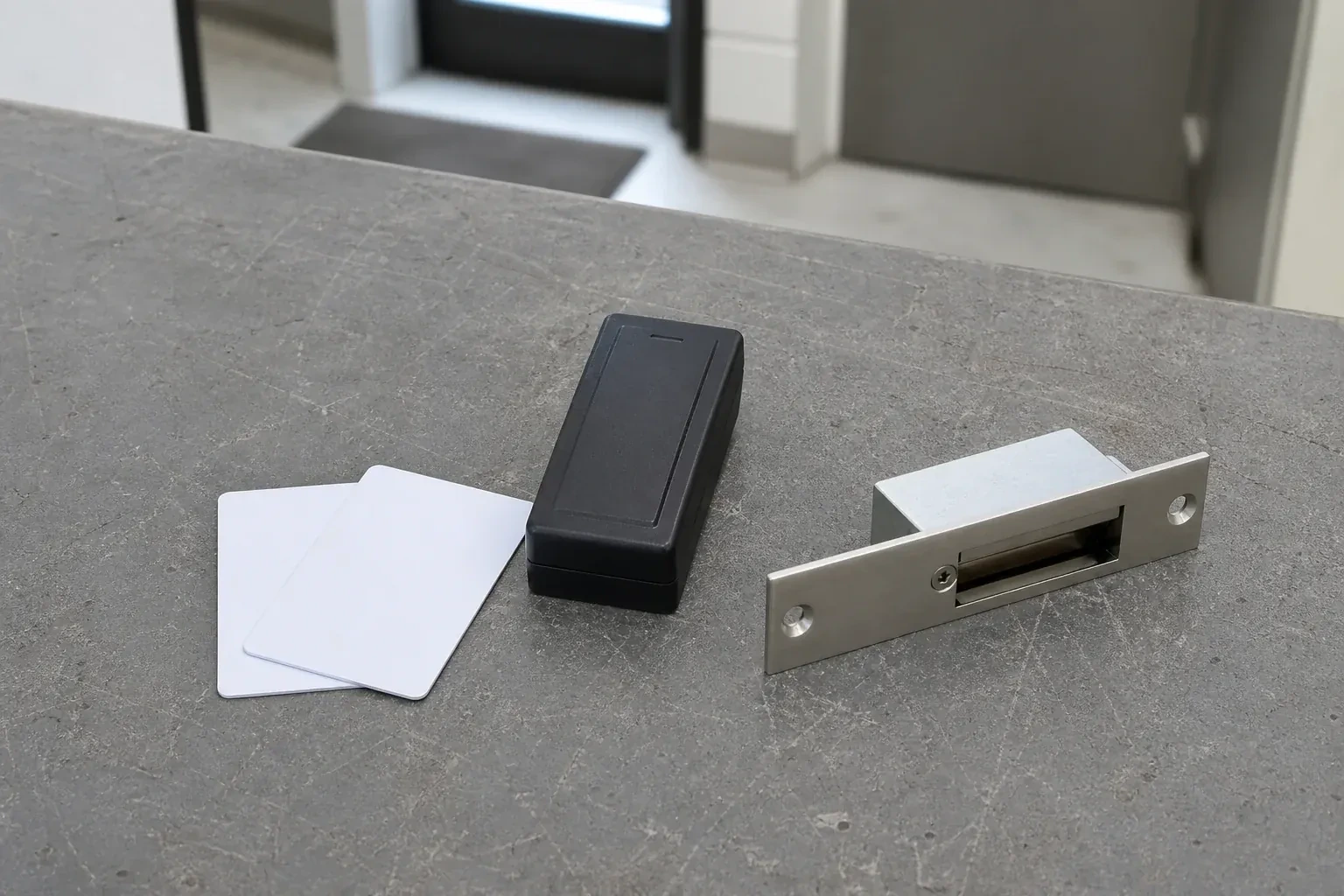
A building already running an intrusion alarm or a camera system gains from an access control installation that speaks to them rather than sitting apart from them: an arm-and-disarm event that lines up with the person who unlocked the door, a camera clip tagged to a specific credential instead of a blank time stamp. The reader and the lock still do the physical work of the opening; the value is in how the record from that opening lines up with everything else the building already tracks.
How the visit goesThe team has grown past the point where one shared key still makes sense. New hires need a way in before a manager arrives, and the current setup cannot tell one person's entry from another's.
High Park
How the visit goes
Confirming what the system needs to do
Before any hardware is chosen, the locksmith sits down with whoever will administer the system afterward and works out what it actually needs to do: which doors deserve their own control, whose entry needs a record, whether one opening keeps different hours than another, and who should be able to add or remove a credential once the job is finished. This conversation shapes every choice that follows, from a single standalone keypad on one door to a networked controller running several openings on one schedule, and it is where the business, not the installer, sets the priorities the system is built around.
Setting up schedules and access levels
With the wiring finished, the work moves to the controller's software: schedules for regular business hours, another schedule for a loading dock or an after-hours cleaning crew, and access levels that group doors by who is allowed through them. A manager's credential might sit in every access level, while a new hire's sits in only the one or two the role actually needs. Holidays are entered so a schedule does not unlock a door on a day the building is closed, and the whole configuration is saved before any credential is issued against it.
Watching the doors through a change of season
Steel and aluminum frames move slightly with temperature, and a wood door can swell in a humid spell or shrink once the heat comes on for winter, either of which can nudge an electric strike or a magnetic lock's armature plate out of the alignment it was installed with. A door that used to release cleanly and now needs a firm pull, or a magnetic lock that seems to hold less securely than it did in the spring, is usually telling you about the door rather than the electronics, and an alignment check at each change of season keeps it from becoming a pattern.
Access Control Installation
In the van
- Fire alarm interface relay
- Mechanical override cylinders
- Power supply with battery backup
- Low-voltage cable
- Card and fob readers
What affects the quote
Same fees day, night or weekend
1Coordinating a shared or multi-tenant entrance
A shared lobby or parking entrance in a multi-tenant building needs agreement between the property manager and each tenant on which credentials belong where, and that coordination adds time beyond a single business's own doors.
2Room left for future doors
Sizing the controller and power supply with some spare capacity for a door or two added later costs a little more at installation but avoids a second controller purchase when the building later adds an opening.
3The building's age and frame material
A modern hollow metal frame generally accepts new hardware with less adjustment than an older wood frame or a historic building, where matching the existing appearance and construction takes extra care.
Access Control Installation: questions
What's the difference between a standalone and a networked system?
A standalone unit is a self-contained reader and lock at one door, holding its own list of credentials, though it can still need a power or network connection to run. A networked system ties several doors to shared management, sometimes through more than one controller, aggregating schedules and combining logs across all of them. The right choice depends on how many doors need controlling and whether the business wants a single place to manage all of them, rather than one being universally better.
Can the system be expanded to more doors later?
Yes. A system installed with some spare capacity in its controller and power supply can usually take another door or two by adding a reader and lock and wiring it back in. A door far from the existing wiring can instead run its own standalone unit. Either way, existing schedules and credentials do not need to be rebuilt from scratch.
Can visitors or contractors be given temporary access?
Yes, a temporary credential can be issued for a contractor, a cleaner, or a visitor with its own schedule and, where the system supports it, an expiry so it stops working on its own once the job is done. This avoids handing out a permanent code or a key that then has to be tracked down and collected afterward.
Commercial Locks
Access Control Installation near you
In High Park the work spans everything on a door that turns, latches or bolts. Homes: lockouts, rekeys, replacements, deadbolts, smart locks, heritage hardware. Businesses: storefront locks, exit devices, closers, master key systems, safes. Read the service that fits and see how a visit runs from start to finish.