Commercial · High Park
Master Key System Design in High Park
The office key ring has become the org chart. Every manager carries a fistful of cuts, a couple of staff hold copies nobody remembers issuing, and when someone asks which key opens the records room, three different people give three different answers.
Master Key System Design
In plain words
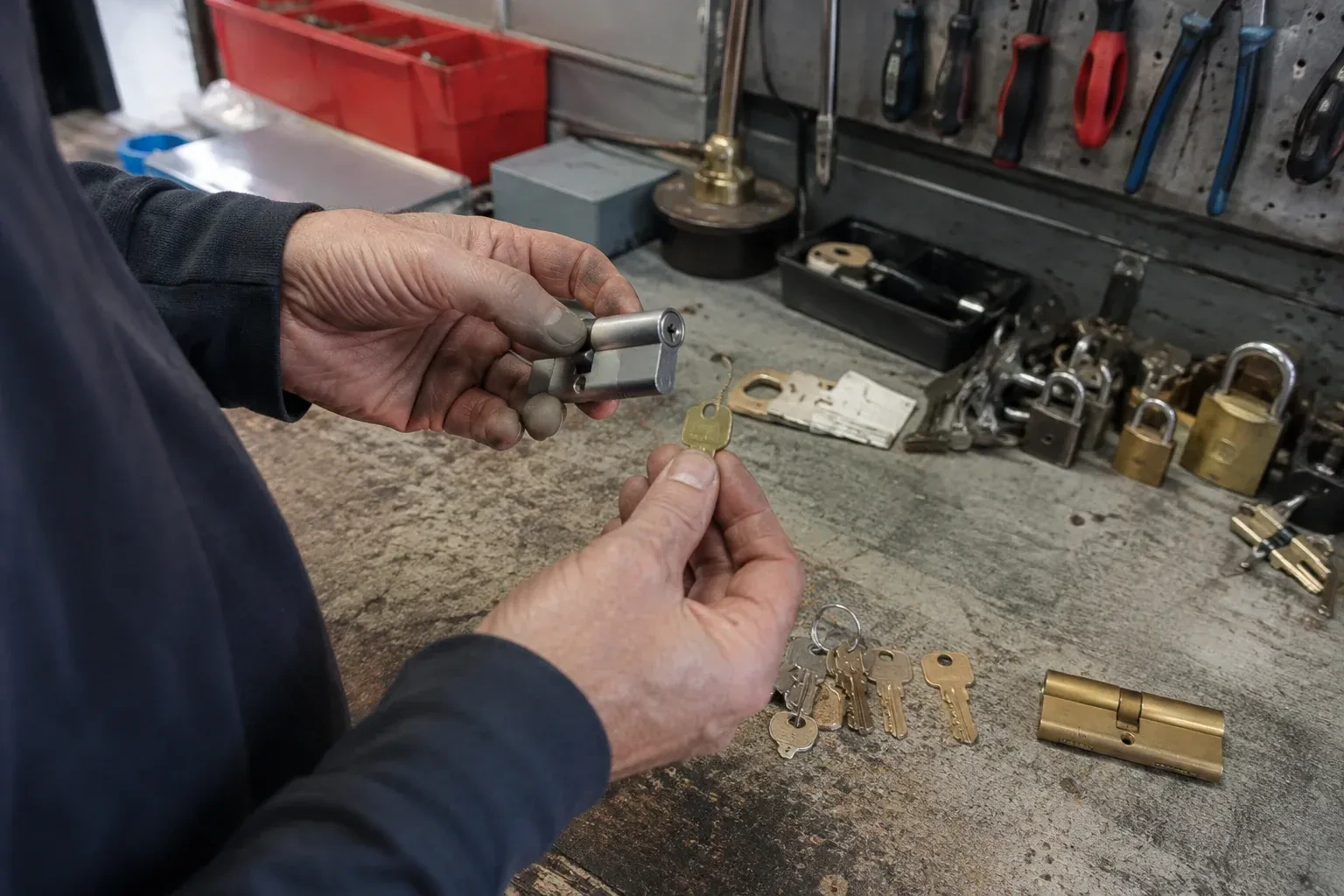
Master key system design is the work of turning a property's separate locks into one coherent hierarchy: a change key for an individual door, a sub-master over a department or floor, and one top-level master reserved for the few people who need it. The locksmith records who should open what, matches that list to the cylinders already installed or to new ones chosen for the job, and pins every lock so each key opens exactly its intended group. The finished system comes with a chart the owner controls, so access follows the organization instead of following whoever happened to be handed a spare key.
How the visit goesOn the warehouse floor, a shift supervisor's key opens the loading dock, the tool crib and the manager's office, though only the dock is really part of the job. Nobody planned it that way; the key was simply copied from whichever one was closest at hand.
High Park
How the visit goes
What is already on the doors
Every door on the property is walked and logged: the cylinder brand or keyway, whether it is a knob, lever, deadbolt or mortise case, its condition, and which doors currently share a key by accident rather than by design. This inventory decides how much of the existing hardware can join a new hierarchy without modification and how much needs replacing to fit cleanly into the planned levels. Skipping this step is how master key projects end up half-finished, with some doors on the new system and others quietly left on whatever key they always had.
Bringing electronic and mechanical access into one plan
Where a property mixes mechanical cylinders with keypad or card-based doors, the mechanical hierarchy is designed to line up with the electronic access groups rather than run as a separate, unrelated system. A department that sits at one sub-master level on the mechanical side is kept at a matching level on any electronic doors it also uses, and any mechanical override cylinders behind an electronic lock are pinned into the same chart as every other door, so one document still describes the whole property.
Care that keeps the hierarchy intact
A little routine care keeps a master key system working the way it was designed. Cylinders should get whichever lubricant the cylinder maker actually recommends, since that varies by manufacturer and some rule out graphite while others call for a light oil, and a key that starts needing a wiggle is worth attention before it is forced or breaks off. None of this maintenance touches the pinning itself, so the hierarchy stays exactly as documented on the chart through years of ordinary use.
Master Key System Design
In the van
- Key marking tools
- Cylinder decoders
- Bench test fixture
- Cylinder pinning kit
- Keying chart
What affects the quote
Same fees day, night or weekend
1Working around an occupied, operating property
Rekeying doors in a planned sequence so a business keeps operating throughout, rather than all at once, takes coordination with the owner's schedule. Properties that need this staged approach, with interim arrangements for doors mid-conversion, add planning time beyond a straightforward, all-at-once installation.
2Number of keys cut and marked
Each key cut and marked for a holder is counted individually in the quote, whether it is a change key for one door or a top-level master for an owner. More staff at the same level naturally means more keys cut than a business with only a handful of holders.
3Electronic locks alongside mechanical keys
Where keypad or card doors need to line up with the mechanical hierarchy, the quote includes the extra coordination of matching access levels across both systems and pinning any mechanical override cylinders into the same chart as the rest of the property.
Master Key System Design: questions
Can a master key system be expanded later without redesigning it?
Usually yes, if spare capacity was planned into the keying platform from the start. A new hire is normally handed a copy of the bitting their role already calls for, and a realistic new door can be pinned to accept a combination already reserved for that purpose. A system pinned to its absolute limit on day one has less room to grow, and adding a level to existing doors later can mean repinning cylinders that are already in daily use.
How long does designing and installing a master key system take?
It depends on the number of doors and levels involved. A small business with a handful of doors and one or two levels moves through assessment, pinning and testing in less time on site than a multi-floor property with several departments and a top-level master, where more doors, more testing and more keys to cut all add to the work involved.
What is a restricted keyway and do I need one?
A restricted or patented keyway limits who can cut a copy of your keys to whoever holds the manufacturer's authorization record, rather than any hardware counter. It suits doors behind which cash, records or controlled supplies sit. A standard keyway is simpler to administer and works well for lower-risk doors where duplication control matters less.
Commercial Locks
- Access Control InstallationThe team has grown past the point where one shared key still makes sense.
- Panic & Exit HardwareThe crossbar on the loading-dock door barely returns anymore.
- Commercial-Grade Lock ReplacementOvernight someone forced the back door, and the cylinder face is scarred, the metal around the…
Master Key System Design near you
In High Park the work spans everything on a door that turns, latches or bolts. Homes: lockouts, rekeys, replacements, deadbolts, smart locks, heritage hardware. Businesses: storefront locks, exit devices, closers, master key systems, safes. Read the service that fits and see how a visit runs from start to finish.